Water stain on your ceiling? How to find the source
A brown ring on the ceiling is unsettling, especially when you don't know where the water is coming from. The good news is that most ceiling stains are fixable, and many don't mean tearing out drywall.
In this guide, you'll learn how to tell a roof leak from an AC clog or a plumbing leak, and which wet materials can stay, so you know whether to call a roofer, a plumber, or the
water damage restoration team at Peachtree Mitigation.
TL;DR: What to know about a ceiling water stain
- When the stain shows up it points to the source. Rain suggests the roof, a hard-running AC suggests the condensate line, and a stain under a bathroom in any weather suggests plumbing.
- Stop the leak first. Drying the drywall, insulation, and framing it soaked is a separate job.
- Drywall doesn't always have to come out. The EPA says it "may be dried in place if there is no obvious swelling and the seams are intact."
Check whether it's safe to stand under
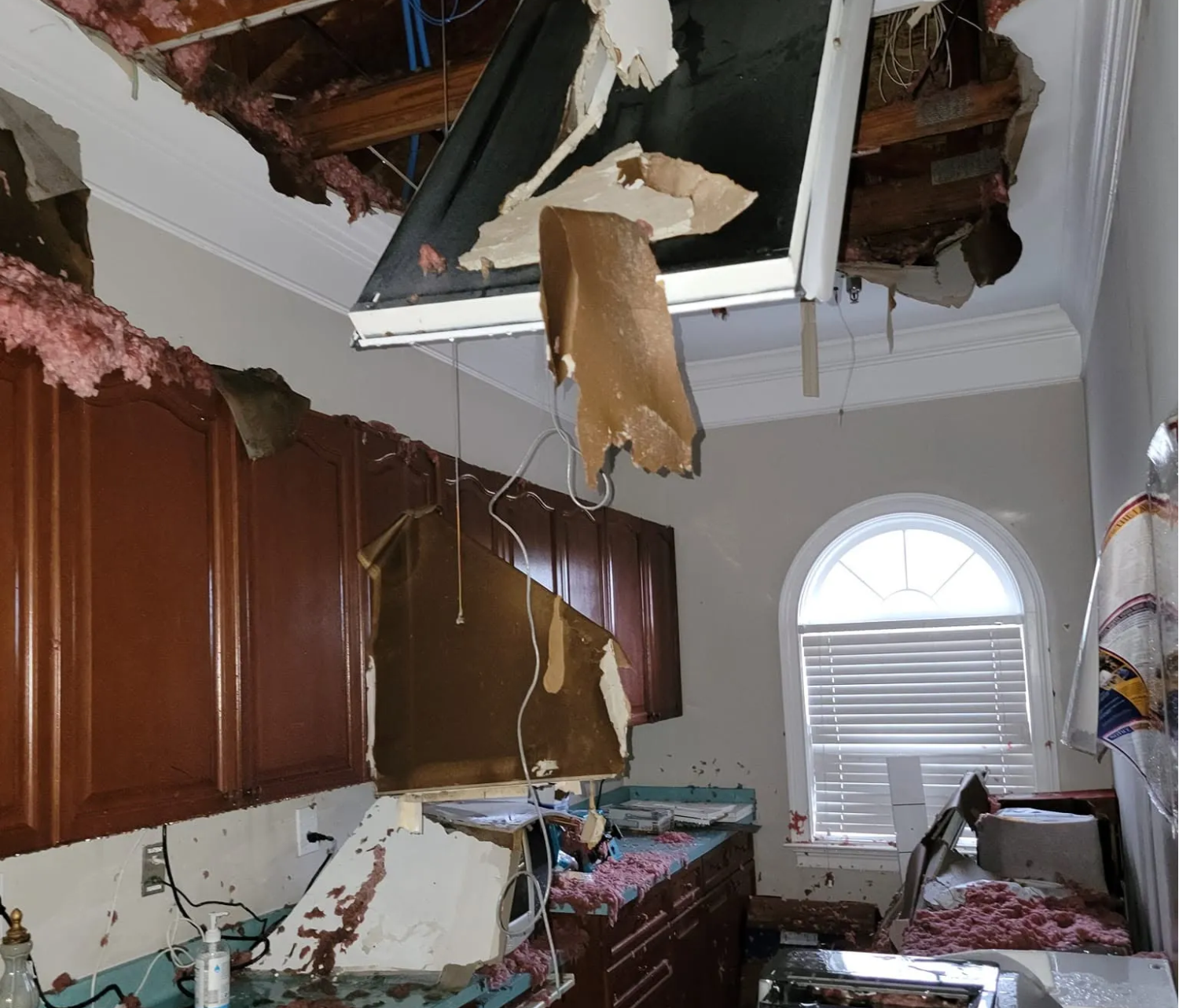
If the ceiling sags, bulges, or drips near a light fixture, deal with safety before anything else.
Turn off the breaker for any light or fan in the wet area. Move furniture and electronics out from under the stain. If the drywall is holding a bubble of water, set a bucket underneath and keep people out of the room until a pro can drain it. Wet drywall gets heavy and can come down without warning.
If the ceiling is flat and firm, you have time to find the source.
Match the stain to its source
Match the stain to what was happening when it appeared. Rain points to the roof, a hard-running AC points to the condensate line, and a stain under a bathroom that shows up in any weather points to plumbing.
| When it shows up | Likely source | Who to call first |
|---|---|---|
| During or after rain | Roof, flashing, or overflowing gutters | Roofer |
| Hot, humid days with the AC running | AC condensate drain | HVAC technician |
| Any weather, under a bathroom or kitchen | Plumbing supply or drain line | Plumber |
| Cold, sunny mornings, near a bath fan | Bath fan venting into the attic | HVAC technician |
| Growing no matter what you do | Leaking supply line | Shut off the main water valve, then call a plumber |
Roof leaks
If the stain appears after storms and dries out between them, start with the roof.
Roof water often runs along rafters and the top of the insulation before it drips, so the stain may not sit directly under the spot where water gets in. Next time it rains, take a flashlight into the attic. Look for wet wood or dark streaks on the roof deck, which is the plywood the shingles are nailed to.
Pay close attention to places where something passes through the roof, like chimneys, vent pipes, and skylights. Also check the flashing, the metal strips that seal those joints. In the attic, step only on the wood joists, never on insulation or drywall.
AC condensate overflow
If the stain is near your indoor AC unit (the air handler) or a supply vent, and it shows up when the AC has been running hard, check the condensate system.
Your AC pulls moisture out of the air. That water, called condensate, drains through a pipe to the outside. A 2016 article in the HVAC trade publication
ACHR News on condensate drain management lists three main reasons it leaks: a crack in the overflow drain pan, a clogged drain line that backs water into the overflow pan, or a dirty air filter that lets the cooling coil ice up and drip. The article warns that a backed-up drain can lead to thousands of dollars in repairs to drywall, ceilings, and floors.
If your air handler is in the attic, look at the pan underneath it. Standing water there means the drain line needs attention. If your system has a float switch, an AC that keeps shutting itself off can also mean the pan is full.
Plumbing above the ceiling
If the stain sits under a bathroom, kitchen, or laundry room and doesn't follow the weather, look at the plumbing.
Two kinds of pipes run above your ceiling, and they leak differently. Supply lines carry pressurized water all the time, so a supply leak keeps growing even when nobody's using water. Drain lines carry water only when a fixture runs, so a drain leak shows up after a shower, a flush, or a load of laundry.
If the stain is right under a toilet, one possible source is the wax ring, the seal between the toilet and the floor drain. Water from a toilet drain or sewer line isn't clean water. Read our guide to
Category 1 vs. Category 3 water before you clean anything up.
Attic condensation from a bath fan
If small stains appear on cold, sunny mornings near a bathroom exhaust fan, check where that fan vents.
A fan that blows into the attic pushes warm, damp air against the cold roof deck. The moisture can condense there and later drip onto the ceiling. That's one reason Section M1501.1 of the
International Residential Code on exhaust discharge states: "Air shall not be exhausted into an attic, soffit, ridge vent or crawl space." The fix is a duct that carries the fan's air outside.
Run five checks before you call anyone
These checks help you tell the roofer, plumber, or HVAC tech what's leaking and when.
- Photograph and mark the stain. Take a wide photo and a close-up, then trace the stain's edge in pencil and write the date and time next to it. If the stain grows past the line, the leak is active.
- Watch your water meter. Turn off every faucet, appliance, and the ice maker, then check whether the meter's dial or leak indicator moves. Movement with everything off means a supply line is leaking somewhere.
- Test the fixture above. Run the shower for several minutes and check the stain. Then flush the toilet a few times and check again. If the stain grows after one and not the other, that fixture's drain is the place to look.
- Check the drain pan under the air handler, if you can reach it safely.
- Write down what was happening. Note whether it rained, whether the AC ran hard, or whether it was a cold morning. Then use the table above to match it.
Know what can stay and what has to go
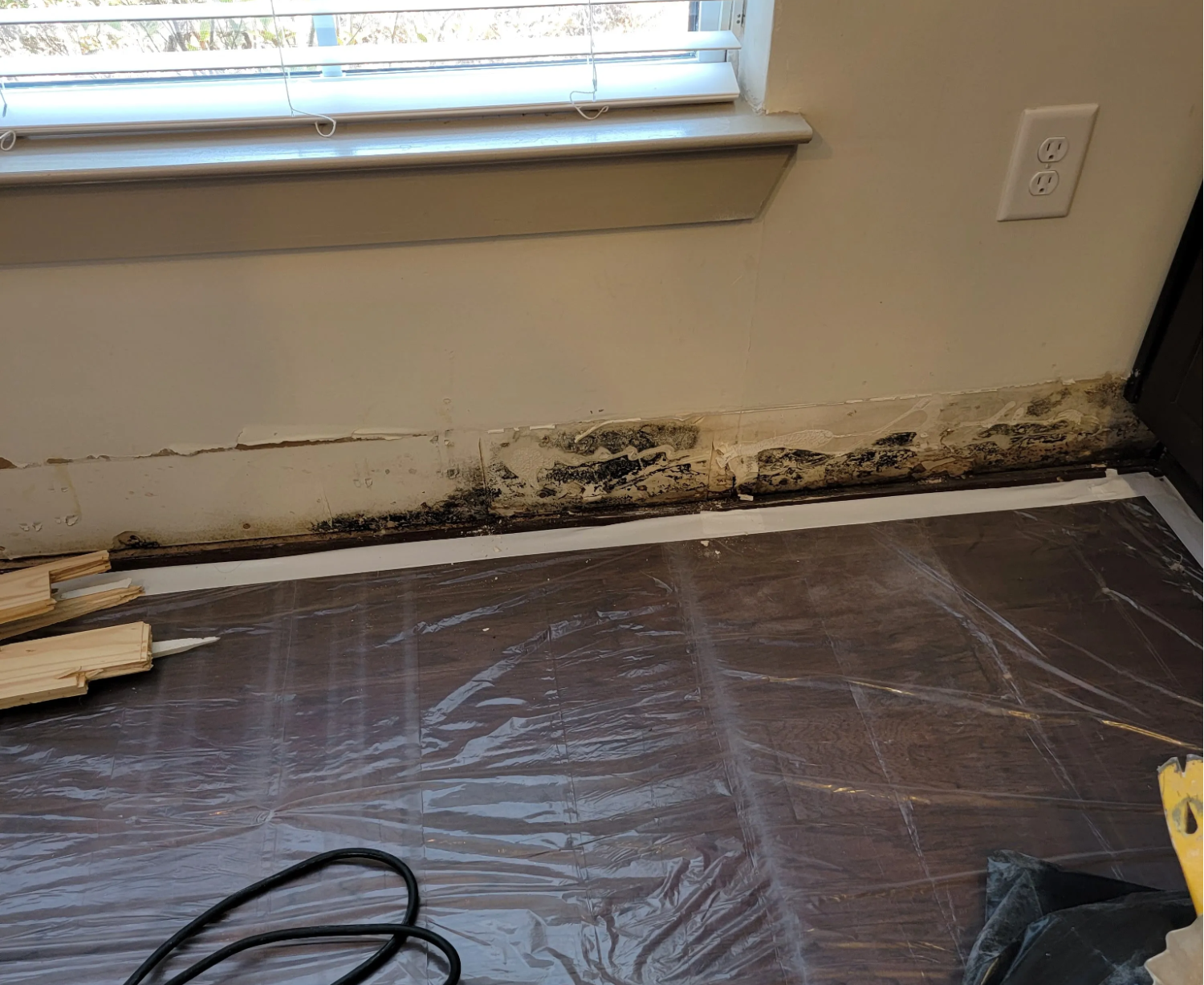
Whether a wet ceiling material can be saved depends on what it is and how long it stayed wet.
The EPA publishes a material-by-material cleanup table in
Mold Remediation in Schools and Commercial Buildings, Table 1(EPA 402-K-01-001, reprinted 2008). It was written for schools and offices, but the materials are the same ones in your ceiling.
| Material | EPA guidance | What it means for your ceiling |
|---|---|---|
| Drywall | "May be dried in place if there is no obvious swelling and the seams are intact. If not, remove, discard, and replace." The EPA also advises ventilating the wall cavity if possible. | Firm drywall with tight seams can often be dried in place. Swollen or sagging panels come out. |
| Ceiling tiles (finished basements) | "Discard and replace." | Replace wet tiles. |
| Fiberglass insulation | "Discard and replace." | Pull out wet batts above the stain. |
| Cellulose (blown-in) insulation | "Discard and replace." | Vacuum out and replace wet blown-in insulation. |
| Wood framing and roof deck | "Remove moisture immediately and use dehumidifiers, gentle heat, and fans for drying." | Joists and decking get dried, not replaced. |
Timing matters. The EPA's table is built around responding within 24 to 48 hours, and the agency adds that "even if materials are dried within 48 hours, mold growth may have occurred." Our post on
the 48-hour rule for mold prevention explains what to do in that window.
The table also assumes clean water. If the leak came from a toilet or sewer line, leave the cleanup to a professional.
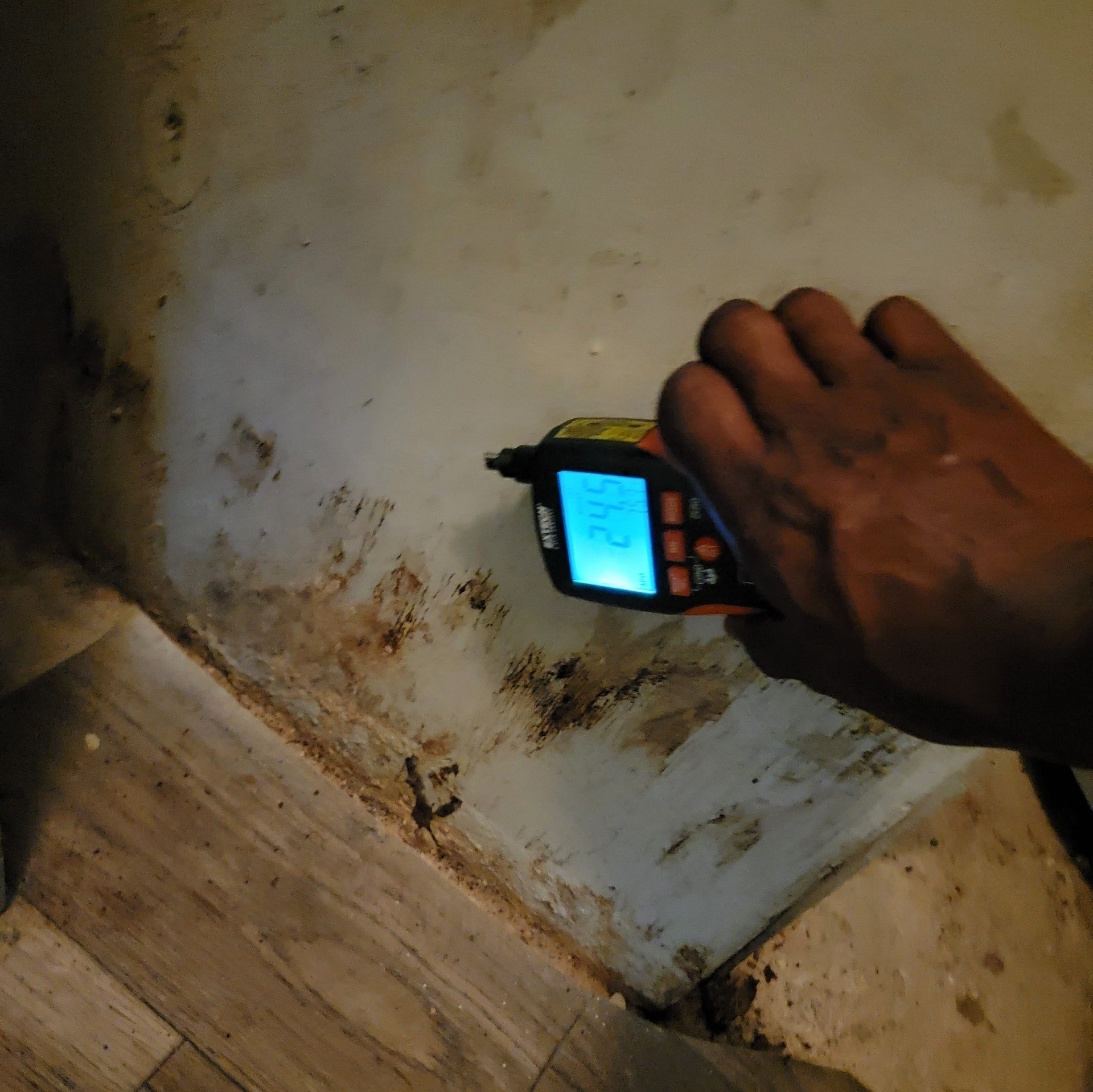
A ceiling that looks dry from below can still be wet on top of the drywall and in the insulation. Restoration crews check with moisture meters and thermal cameras. Our
warning signs of hidden water damage cover what else to watch for.
When to call a restoration company

The roofer, plumber, or HVAC tech stops the water. A restoration company dries and repairs what the water already reached.
Call for restoration help when any of these apply:
- The ceiling sags, feels soft, or holds a water bubble
- Insulation above the stain is wet
- You notice a musty smell, or the stain comes back after the leak was fixed
- You can't find the source with the checks above
- The water may have come from a toilet or drain line
Professional water damage restoration follows the
ANSI/IICRC S500 Standard for Professional Water Damage Restoration(5th edition, 2021), which covers drying methods, documentation, and structural restoration.
Our certified team handling
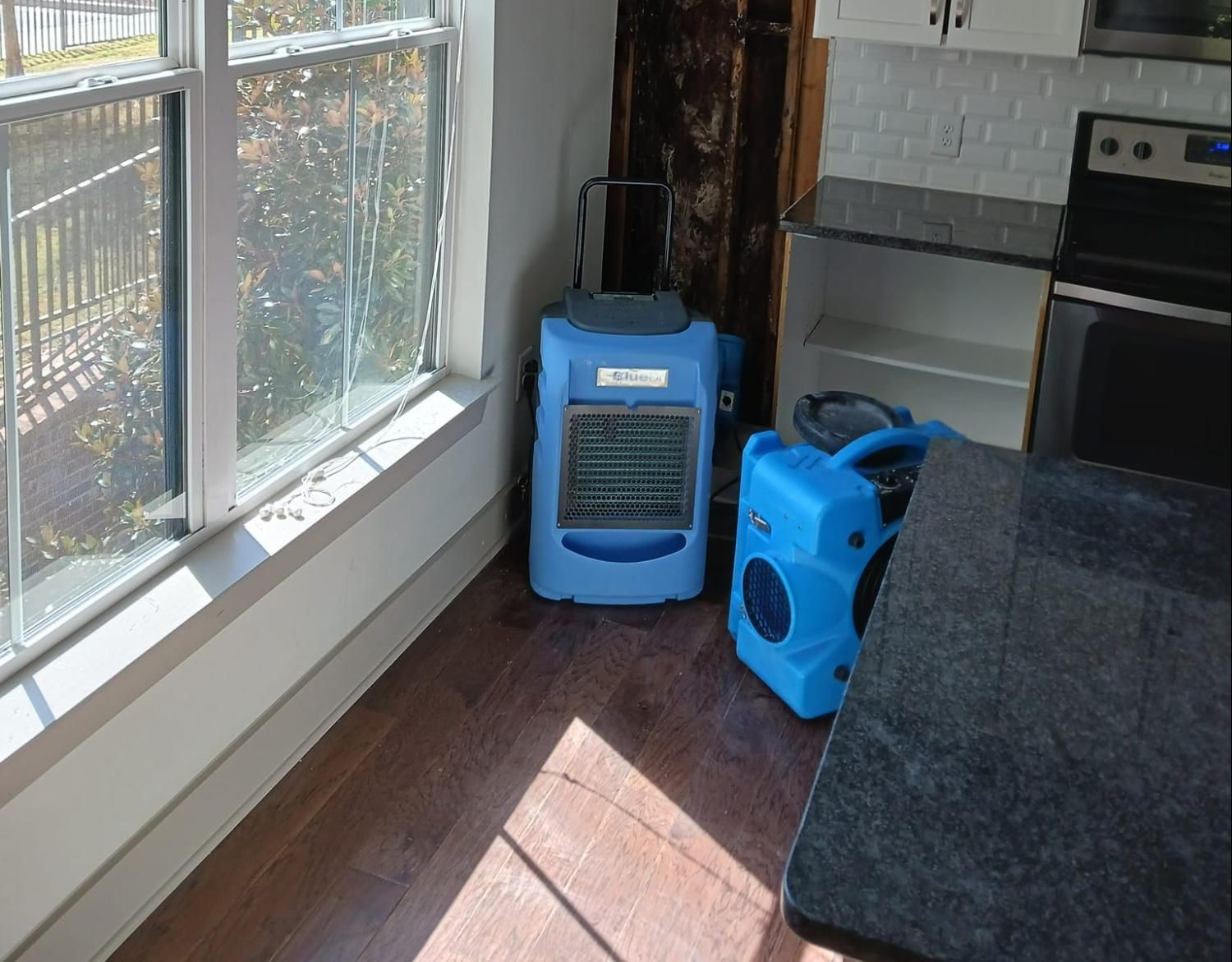
water damage restoration in Duluth, GA uses moisture mapping and thermal imaging to find how far the water spread, then dries the framing in place with dehumidifiers and air movers. We document moisture readings and photos for your insurance claim, and every job is backed by our satisfaction guarantee. If your stain is small, dry, and the leak is already fixed, we'll tell you that, too.
Keep your photos either way.
Insurance Information Institute homeowners claims data shows that from 2018 to 2022, 1.6% of insured homes had a water damage or freezing claim, second only to wind and hail.
Your next step if the ceiling is still wet
Once you've matched the stain to its source and stopped the leak, what's left is drying what the water touched, ideally within the EPA's 24-to-48-hour window.
If you have a wet ceiling in Duluth or a nearby community in Gwinnett, Fulton, or Forsyth County, call us at (404) 480-9525, day or night, or
get a fast quote for ceiling water damage. We'll measure what's wet and tell you what can stay.
About the author
Joe Preston owns Peachtree Mitigation, a certified, locally owned water, mold, fire, and smoke restoration company that has served Duluth for more than 10 years. Customers often mention Joe by name for taking the time to answer their questions and for being honest about what a home actually needs.