Before You Hire Anyone: What Every Duluth Homeowner Should Know About Water Damage Restoration
You notice it on a Tuesday evening — a soft give underfoot near the laundry room, or a waterline on the drywall you don't remember being there yesterday. Maybe a pipe let go while you were at work, or last night's storm pushed water under a door that has never been tested quite like that before.
Whatever the source, the damage is already moving. Water travels along framing, wicks up drywall, and pools inside wall cavities before it ever shows up on the surface in a way you can see. If you're already dealing with water damage restoration in Duluth, the decisions you make in the next 24 to 48 hours will shape the outcome more than anything else, including which company you call.
This guide walks you through what the restoration process actually looks like, what sets a qualified company apart from an unqualified one, and where most Duluth homeowners go wrong.
TL;DR — Before You Hire Anyone: What Every Duluth Homeowner Should Know About Water Damage Restoration
- Water spreads faster than it looks — through walls, under subfloors, into insulation — often before any visible sign at surface level.
- Mold can begin growing within 24 to 48 hours in Georgia's climate.
- A legitimate restoration process follows five steps: assessment, extraction, structural drying, cleaning and sanitizing, and repairs.
- IICRC-certified contractors follow documented restoration standards. Many companies that show up after storms do not.
- Duluth's crawlspace-heavy housing stock creates moisture pathways that aren't visible from the living level.
- The three mistakes homeowners make most: waiting, DIY drying with fans and shop vacs, and choosing based on price.
If your home has water damage right now, call Peachtree Mitigation at 404-480-9525
Call Peachtree Mitigation at 404-480-9525Why the First 24 Hours After Water Damage Are Critical

How water spreads through walls and subfloors faster than it looks
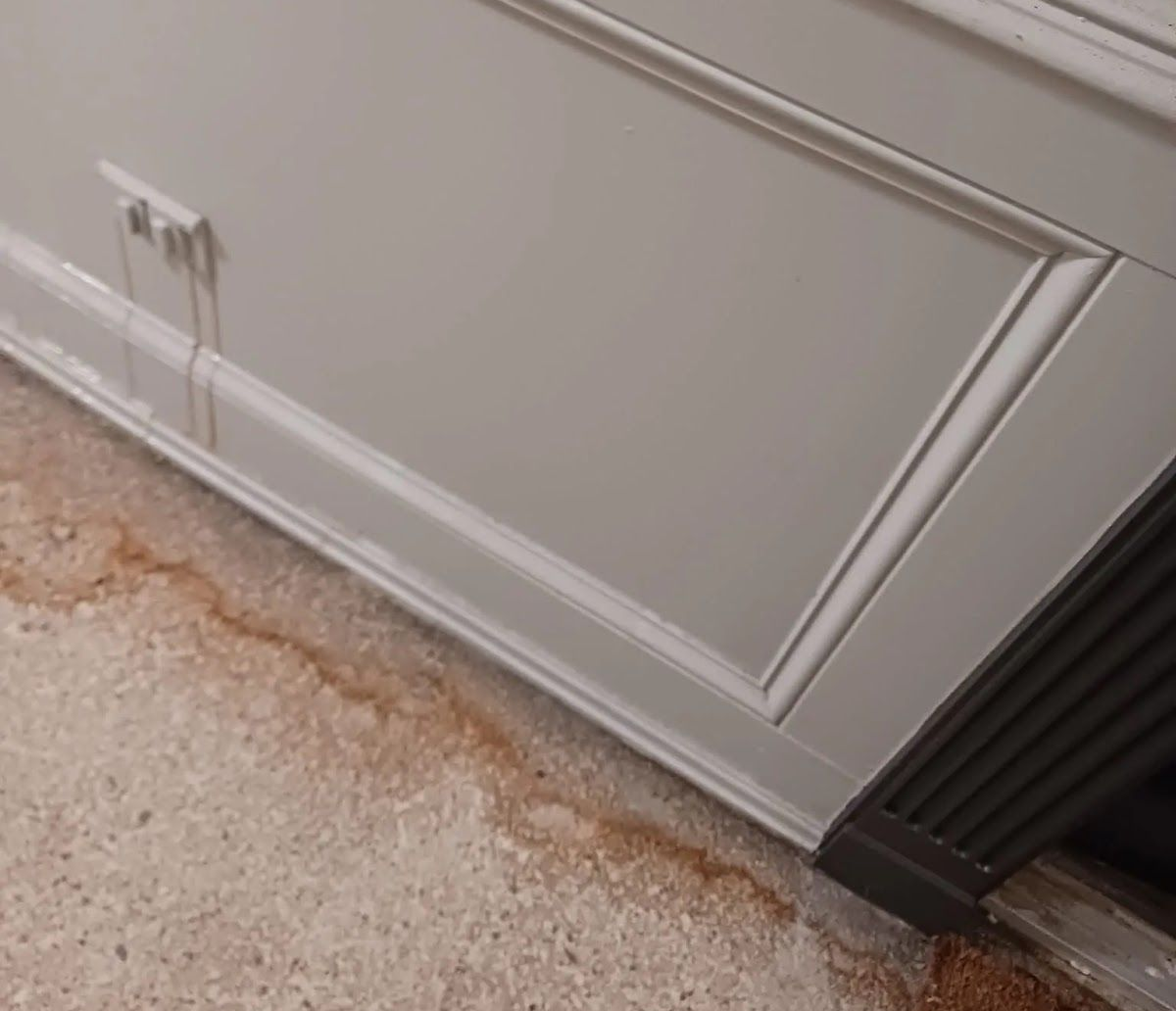
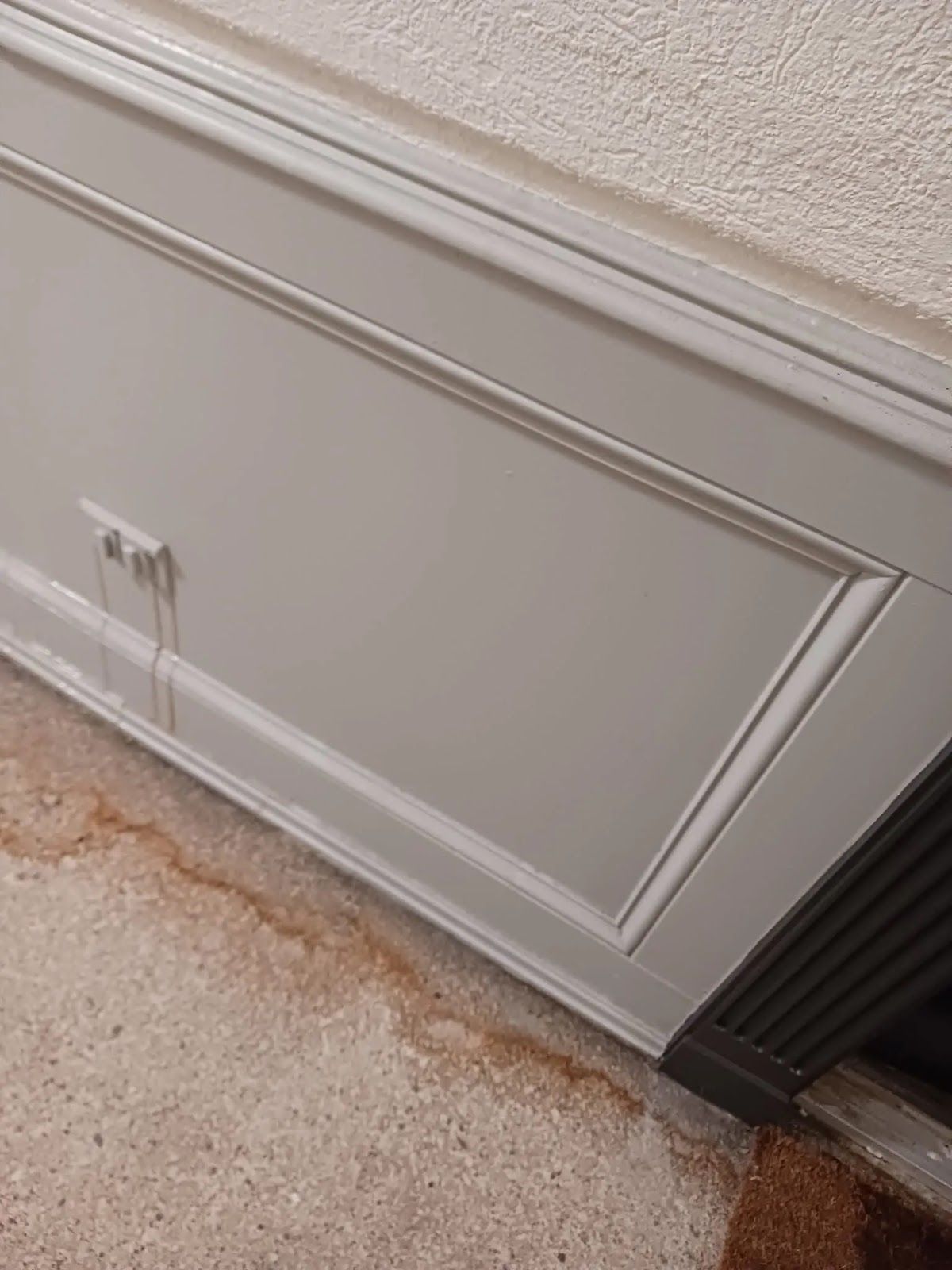
What you can see on the surface is rarely the full picture. Water moves along the path of least resistance, and in most homes, that means it's wicking up drywall, traveling along floor joists, and settling inside wall cavities well before anything visible appears at floor level.
Hardwood floors begin absorbing moisture quickly and can start warping within hours. Carpet padding traps water underneath, creating a reservoir that household fans can't reach. Insulation inside walls holds moisture for days without any outward sign.
By the time a stain appears on the ceiling below a wet floor, the water has already traveled further than the stain suggests.
The mold window — why 24 to 48 hours changes everything
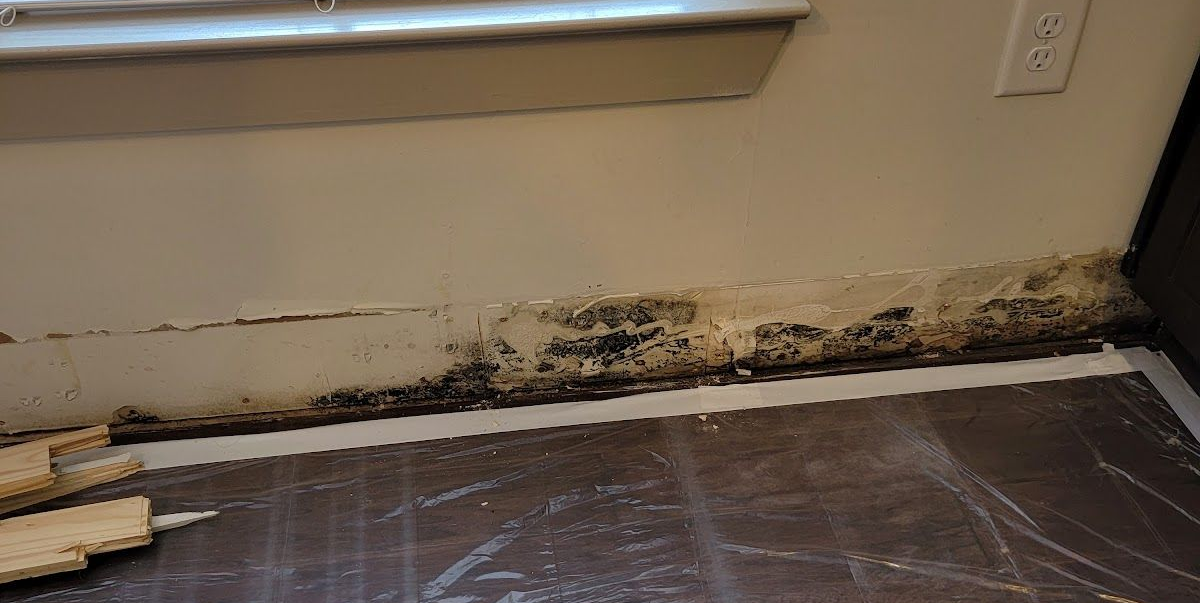
There's a number that drives most restoration decisions: 24 to 48 hours. That's how long it takes for mold to begin colonizing damp organic material under conditions like Georgia's.
According to EPA guidelines on mold and moisture, mold growth can establish on drywall, wood framing, carpet, and insulation within that window, given adequate moisture and warmth. In Duluth, warmth is rarely the variable in question.
This is why response time matters so much, and why leaving water damage to "see what happens" almost never ends the way homeowners hope. For a deeper look at what's at stake, see this article, 7 Urgent Reasons To Address Water Damage Immediately
What Makes Water Damage Different in Duluth, GA

Most restoration guides are written for a national audience.
They don't account for the fact that Duluth sits in a humid subtropical climate, that a large portion of local housing was built during a period when crawlspace construction was standard, or that Gwinnett County's storm patterns concentrate water intrusion in ways you won't find in a guide written by a company headquartered somewhere drier.
Here's what's specific to where you live.
Georgia's humid subtropical climate and what it does to drying timelines
Standard structural drying timelines assume moderately controlled conditions. In drier parts of the country, that assumption mostly holds. In Duluth, it often doesn't.
Georgia's ambient outdoor humidity regularly exceeds 70 percent during spring and summer. Opening windows doesn't help. It makes things worse. Humid outdoor air entering a wet structure raises the equilibrium moisture content of every surface it contacts, which means walls and subfloors stay damp longer.
Restoration companies using equipment or timelines calibrated for drier climates can miss this, and incomplete drying is exactly how mold problems begin.
Duluth's crawlspace housing stock and hidden moisture pathways
A significant portion of Duluth's residential neighborhoods developed between the 1970s and late 1990s, a period when crawlspace construction was the regional default. Crawlspaces that aren't properly encapsulated become moisture reservoirs, drawing ground moisture upward and providing the conditions mold needs to establish itself under your subfloor before there's any sign of it at living level.
If your home has a crawlspace and has experienced any water intrusion, that space needs to be assessed as part of the restoration scope, not treated as a separate issue to address later. Crawlspace encapsulation services address the underlying moisture pathway that makes re-intrusion possible.
Gwinnett County storm patterns and what triggers most emergency calls
The Atlanta metro's convective storm activity delivers significant rainfall in short windows, a kind of intensity that overwhelms drainage systems and pushes water through door sweeps, foundation cracks, and window wells that handle normal rain without issue.
Gwinnett County averages roughly 55 inches of rainfall per year, well above the national average of roughly 30 inches, and the delivery pattern is as relevant as the total.
It's not a steady drizzle. It's concentrated bursts that test every weak point in a structure simultaneously. That's when the basement floods, the HVAC closet takes on water, and the back corner of the garage becomes a problem.
Why national chains' response times don't work for Duluth neighborhoods
National restoration brands often operate on franchise dispatch models. A call placed from Duluth might route to a technician 40 minutes away who's unfamiliar with the area's construction patterns, street layout, or the failure points common to Gwinnett County homes. In a scenario where every hour extends the damage, that gap isn't incidental.
Local companies know the neighborhoods, know the housing stock, and can be on-site faster. Faster matters here in a way that can't be abstracted into a customer service metric.
What a Legitimate Restoration Process Actually Looks Like

A water damage restoration job isn't just drying a floor. When it's done correctly, it follows a defined sequence, and each step depends on the work done in the one before it.
Step 1 — Emergency contact and rapid on-site assessment
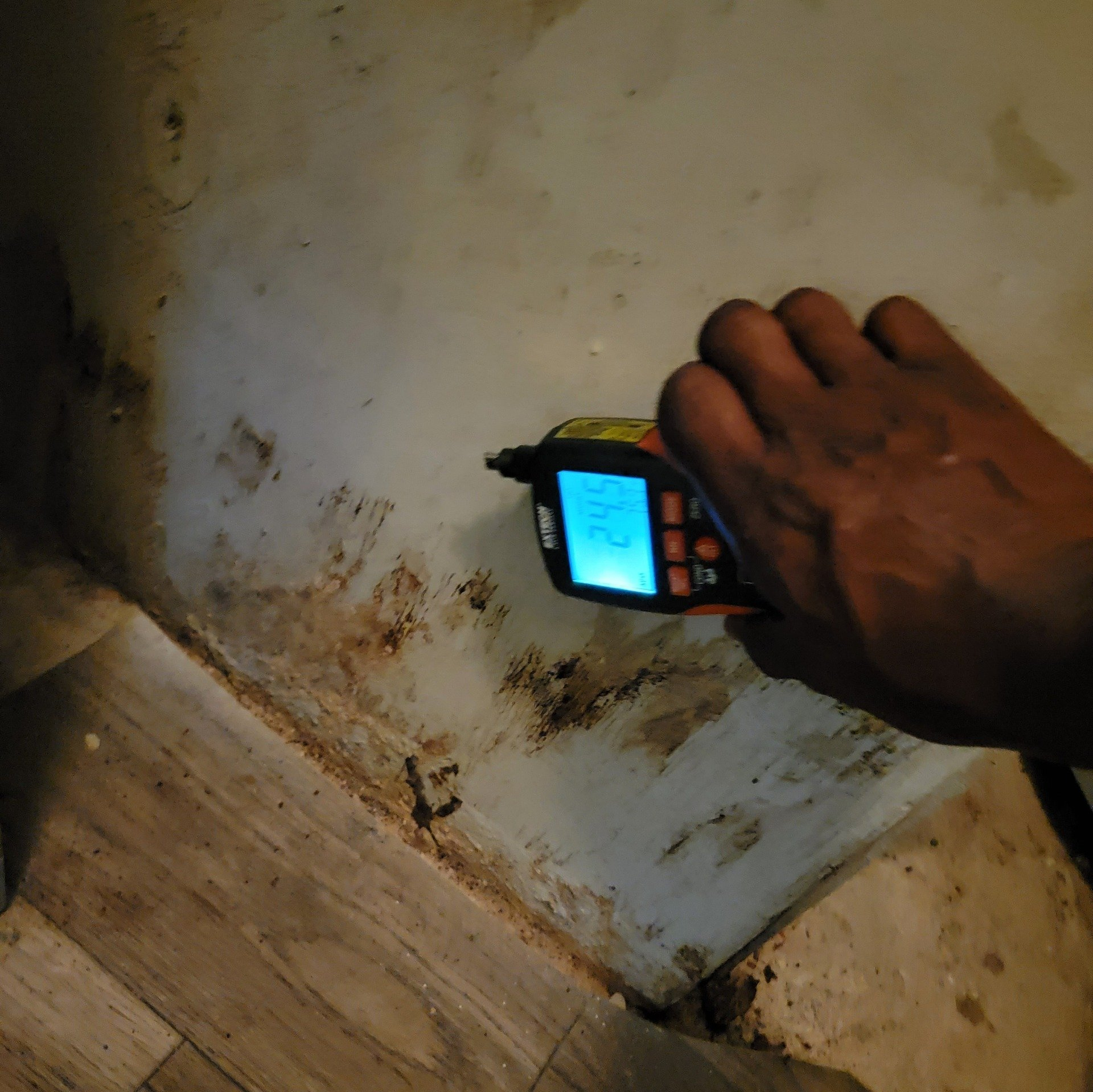
Before any equipment enters the house, a qualified team arrives, documents the damage, assesses moisture levels using meters (not visual inspection alone), identifies the water source category (clean, gray, or black water), and scopes what needs to happen. This step establishes the baseline that everything downstream is measured against, including your insurance claim. Rush it or skip it, and you lose the documentation that makes the rest of the process defensible.
Step 2 — Water extraction
Industrial extractors remove standing water from surfaces and begin pulling moisture from carpet, padding, and porous materials. This is meaningfully different from running a shop vac around a flooded room.
Commercial-grade extractors move significantly more volume per hour and can reach into carpet systems and subfloor assemblies in ways consumer equipment can't. Every hour water remains in contact with materials is an hour of additional absorption. So, the speed of this step has a direct effect on the final scope.
Step 3 — Structural drying and dehumidification
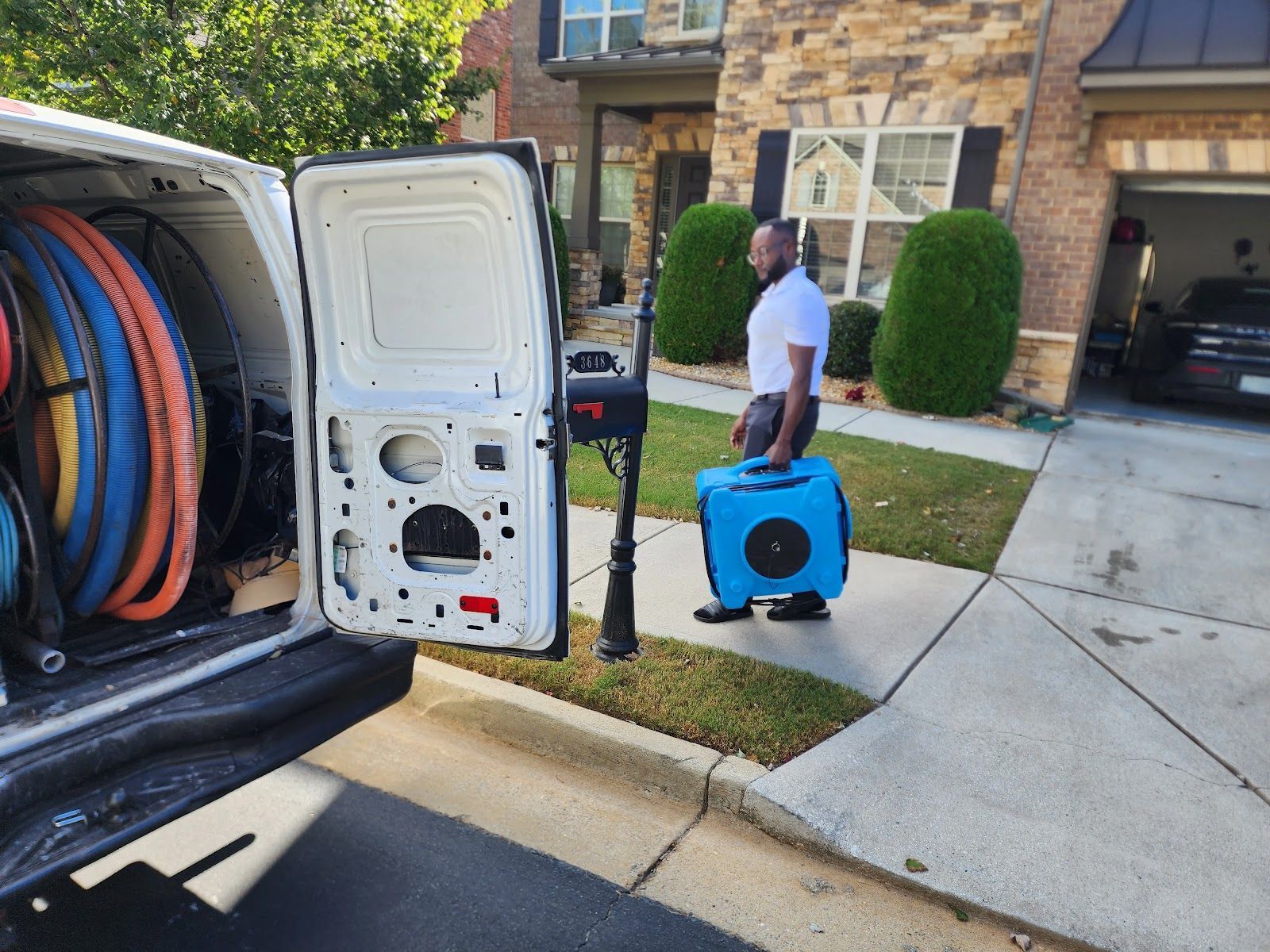
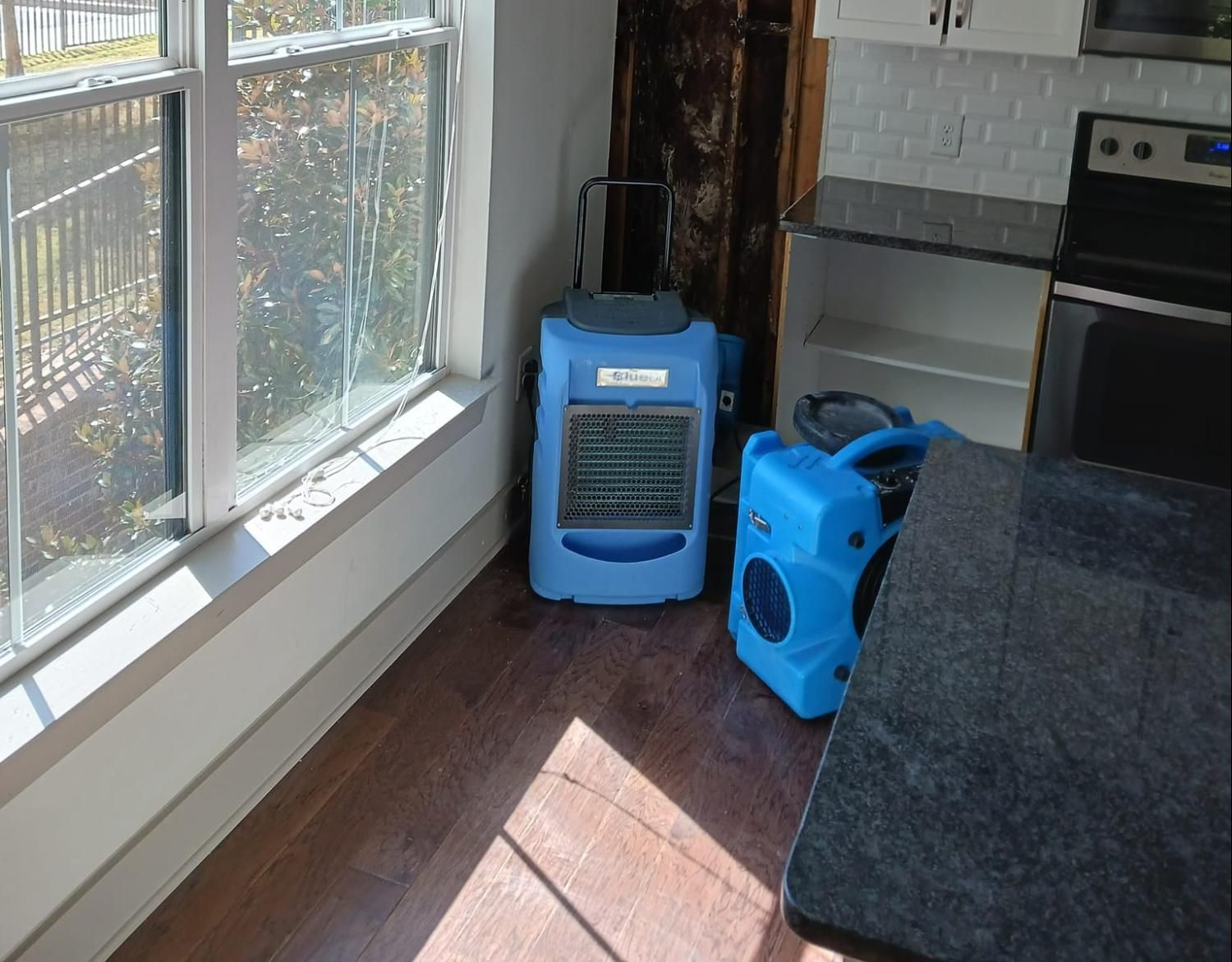
Once surface water is removed, the structural drying phase begins. High-velocity air movers and industrial dehumidifiers work together to reduce the moisture content of walls, subfloors, framing, and insulation. In Georgia's climate, this phase typically runs three to five days, and sometimes longer.
Moisture readings are taken daily to track progress and adjust equipment placement. Drying isn't complete when surfaces feel dry to the touch. It's complete when meters reach target levels inside the structure. Learn more about what the structural drying process involves and why it takes the time it does.
Step 4 — Cleaning, sanitizing, and odor removal
Water, especially gray or black water, introduces contaminants that require direct treatment. This includes antimicrobial applications to surfaces that came into contact with standing water, HEPA vacuuming to remove particulates, and odor treatment using hydroxyl generators or ozone equipment depending on severity.
Less thorough operators frequently skip this step. When the water source was a sewage backup, a washing machine drain, or any exterior flooding event, skipping it is not an option.
Step 5 — Repairs and full restoration
The final phase involves rebuilding what was removed or damaged, like drywall reinstallation, flooring, trim, paint, and structural repairs where needed. A full-service restoration company handles this in-house.
If the company you hire only does mitigation, you'll need a separate contractor for repairs, which adds coordination time, cost, and scheduling complexity to an already difficult situation.
What to Look for When Hiring a Restoration Company in Duluth
The days immediately after water damage are when homeowners are most vulnerable to making a bad hire. Stress and urgency combine with unfamiliarity with the industry to create exactly the conditions that unqualified contractors, and outright predatory ones, are built to exploit.
Certifications that actually matter
The credential that matters most in this industry is IICRC (Institute of Inspection, Cleaning, and Restoration Certification). The IICRC sets the technical standards that govern how water damage is classified, documented, and mitigated.
An IICRC-certified Water Damage Restoration Technician has been tested against those standards and is required to maintain continuing education to keep the credential current.
That doesn't guarantee quality. Credentials never do on their own, but it establishes a floor. A company that isn't IICRC-certified is operating without accountability to any recognized technical standard, which means there's no external benchmark for how their work is supposed to be done.
Red flags that signal a storm chaser or unqualified contractor
- Shows up at your door unsolicited after a storm and offers a same-day discount for signing immediately
- Can't produce proof of liability insurance or licensing when asked
- Quotes a flat price without conducting a moisture assessment first
- Wants full payment before work begins
- Has no verifiable local address or physical presence in the area
- Doesn't mention documentation, drying logs, or moisture readings at any point in the conversation
The storm-chasing model works because homeowners in crisis sign quickly and ask questions later. By the time you notice the job wasn't done correctly, the company is three counties away.
Questions to ask before you sign anything
- Are you IICRC-certified? Can you show documentation?
- Do you carry general liability and workers' compensation insurance?
- Will you provide a written scope of work before starting?
- How will you document moisture readings throughout the drying process?
- Will you communicate directly with my insurance adjuster?
- Do you handle both mitigation and repairs, or only mitigation?
- How does your drying process account for Georgia's ambient humidity levels?
How to Work With Your Insurance Company Without Getting Burned
Your homeowner's policy likely covers sudden and accidental water damage, like a burst pipe, a washing machine overflow, an appliance failure. It typically does not cover gradual leaks, exterior flooding (that requires a separate flood insurance policy), or damage that resulted from deferred maintenance. Knowing that distinction before you file saves significant frustration later.
What to document before restoration begins
- Photograph everything before any water is moved or equipment is placed
- Capture the water source: the cracked pipe, the failed appliance, the entry point
- Note the date and time you first discovered the damage
- Create an inventory of damaged materials and personal property
- Keep records of any immediate out-of-pocket expenses — hotel stays, temporary storage, emergency supplies
Your adjuster works from documentation. The more complete your record from the moment of discovery, the fewer gaps exist for disputed line items down the road.
How your restoration company should communicate with your adjuster
A qualified company will produce a detailed scope of work, maintain timestamped moisture logs throughout the drying process, and communicate directly with your adjuster using the language and documentation format insurers expect.
If a contractor is reluctant to document their work or wants to operate outside the insurance process entirely, that's worth pausing over. The Insurance Information Institute is a useful resource for understanding what your policy covers and how to navigate a claim if you encounter resistance.
The Three Mistakes Duluth Homeowners Make Most Often
These aren't edge cases. They come up repeatedly.
Waiting to see if it dries on its own
Sometimes the surface looks like it does. The floor dries. The waterline fades. But moisture inside a wall cavity doesn't evaporate without airflow, and airflow doesn't reach inside walls without mechanical intervention.
The damage continues out of sight. By the time it becomes visible again, like a soft spot in the floor, a bubbling paint line, a smell. It's usually a mold situation.
Attempting DIY extraction with shop vacs and fans
Consumer fans move air at the surface.
They don't reduce moisture content inside structural materials. A shop vac can remove standing water, but won't pull moisture from carpet padding or subfloor assemblies at the rate the situation requires. The equipment restoration professionals use is different in kind, not just scale, and that difference matters for the final result.
Choosing based on price alone
Water damage restoration isn't an industry where the lowest bid usually reflects competitive efficiency. It often reflects shortcuts, such as incomplete drying, skipped sanitizing, and inadequate documentation. Incomplete drying becomes a mold problem. Skipped sanitizing becomes a contamination and odor issue. Inadequate documentation becomes an insurance dispute.
The costs that follow a cheap job frequently exceed whatever the price difference seemed worth.
Conclusion
Water damage compounds quietly.
A wet wall that looks manageable today is a mold remediation job by next week, and an undiscovered mold issue becomes a structural problem over time. The window to handle it simply and completely is those first 24 to 48 hours. And the company you call in that window makes the actual difference.
If you're a homeowner in Duluth trying to figure this out right now, or trying to understand what to expect before it happens, the fundamentals hold: act fast, hire qualified people, document everything, and don't let urgency override the questions you have every right to ask.
Our Duluth water damage specialists are available around the clock. Ready to talk to a local team that knows Duluth's homes? Reach out to Peachtree Mitigation today!